
What Paper Do You Use for Die Cutting?
Choosing the wrong release liner for your die cut tape is a costly mistake. A mismatch causes parts to fall off mid-production, liners that won't separate cleanly, and warped material that ruins your tolerances. The right release paper selection depends on three factors you cannot afford to overlook: tape thickness, adhesive tack, and liner color.
For die cutting adhesive tapes, the most common release liners are silicone-coated papers ranging from 40gsm to 120gsm. The correct choice depends on your tape's thickness and weight, its adhesion strength, and the visual requirements of the finished part. A thin 0.05mm PET double-sided tape needs a lightweight, low-release-force liner, while a 1.5mm acrylic foam tape demands a heavier, stiffer substrate and a higher release force to keep parts stable through the entire cutting and handling process.
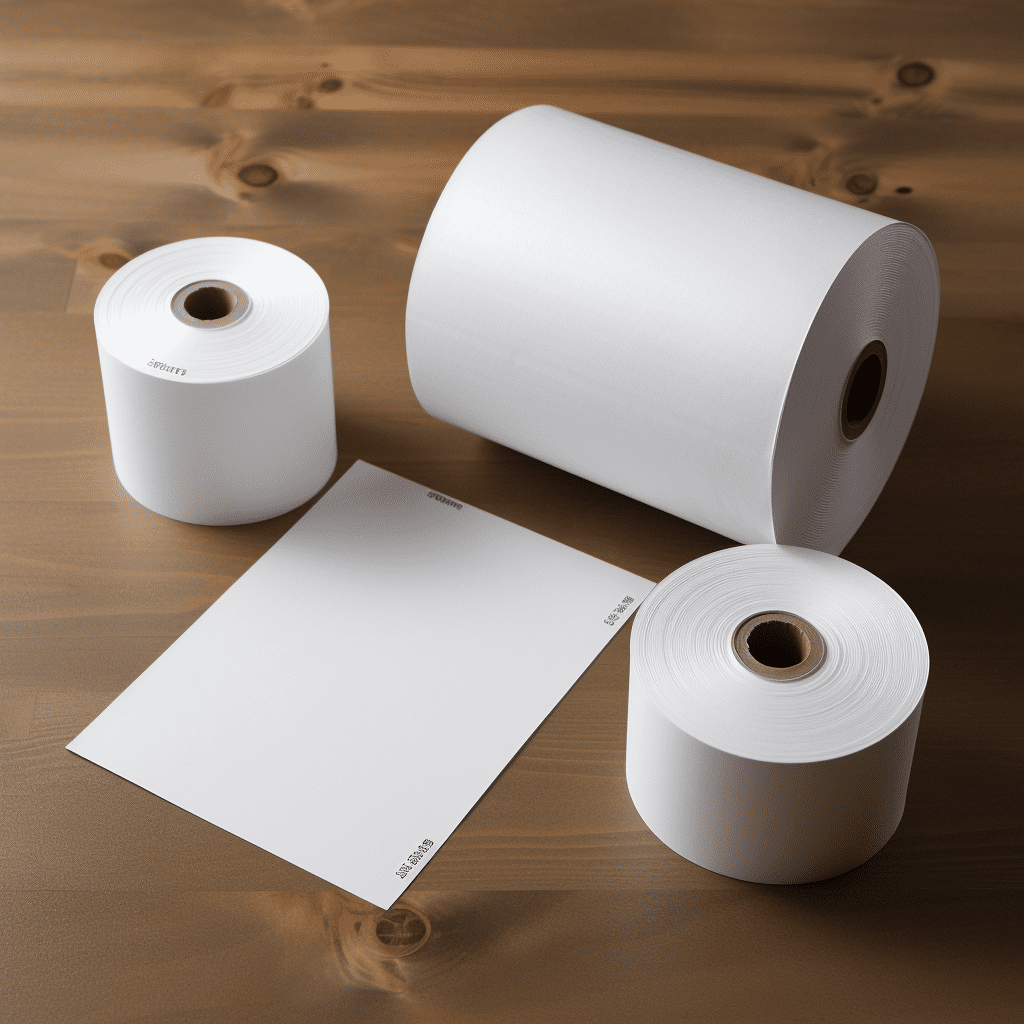
Most engineers and buyers assume release paper is a commodity — a generic backing you choose last and think about never. In my experience, that assumption causes more production headaches than almost any other decision in the die cutting process. Let me walk you through exactly how I think about liner selection for every project.
Does tape thickness really affect your liner choice?
Thin tapes seem simple. Heavy foam tapes seem straightforward. But the interaction between tape weight, stiffness, and liner substrate is where most spec errors happen on the production floor.
When the liner is too light for the tape it carries, the combined laminate bends, buckles, and feeds unevenly through the rotary die. That means inconsistent cut edges, registration drift, and scrap.


The physical weight and stiffness of your tape assembly determine the minimum liner weight you need to maintain flatness and dimensional stability throughout the cutting process.
How liner weight maps to common tape types
Here is how I typically match liner weight to tape construction in practice:
| Tape Type | Typical Thickness | Recommended Liner Weight |
|---|---|---|
| PET double-sided tape | 0.05mm – 0.15mm | 40gsm – 60gsm |
| Acrylic thin foam tape | 0.2mm – 0.5mm | 60gsm – 80gsm |
| PU foam / cushion tape | 0.5mm – 1.0mm | 80gsm – 100gsm |
| VHB / thick acrylic foam | 1.0mm – 2.0mm | 100gsm – 120gsm |
| Multi-layer composite | Varies | 100gsm – 120gsm minimum |
A 0.05mm PET double-sided tape is so thin and light that even a 40gsm liner provides sufficient rigidity. The laminate stays flat, feeds cleanly, and the lightweight liner peels away without resistance.
A 1.5mm acrylic foam tape is a completely different animal. The foam itself has body and memory. It pushes back against the liner. If you use a 60gsm paper under a tape that thick and heavy, the liner flexes under the die pressure. You get:
- Inconsistent cut depth — the die compresses the foam and punches through the liner in some areas
- Part lifting — the foam's recovery force is enough to peel light liners, especially on small die cut shapes
- Roll set and warping — the finished roll deforms because the liner cannot resist the foam's compression
I always recommend going one weight class heavier than you think you need when you are prototyping a new tape and liner combination. It is far easier to reduce liner weight at production scale than to chase a flatness problem after tooling is cut.
The role of liner caliper, not just weight
Liner gsm (grams per square meter) is the starting specification, but caliper (physical thickness) matters just as much for die cutting stability. Two papers can share the same gsm but have different calipers based on their fiber density and coating process.
For high-precision die cutting at ±0.1mm tolerance, I always request a liner with a tightly controlled caliper specification — typically ±3µm on the liner thickness. Variation in liner caliper translates directly into variation in cut depth when using steel rule or rotary dies.
How does adhesive tack affect release liner selection?
Tack is where liner selection gets genuinely technical. The release force between your adhesive and the liner coating must sit inside a narrow window — tight enough that parts stay on the liner during cutting, handling, and shipping, but loose enough that operators or automated equipment can peel them cleanly on the assembly line.
If the release force is too low for your adhesive, parts migrate and fall off. If it is too high, operators struggle to peel parts without stretching or damaging them — and in automated peeling systems, the whole line can jam.
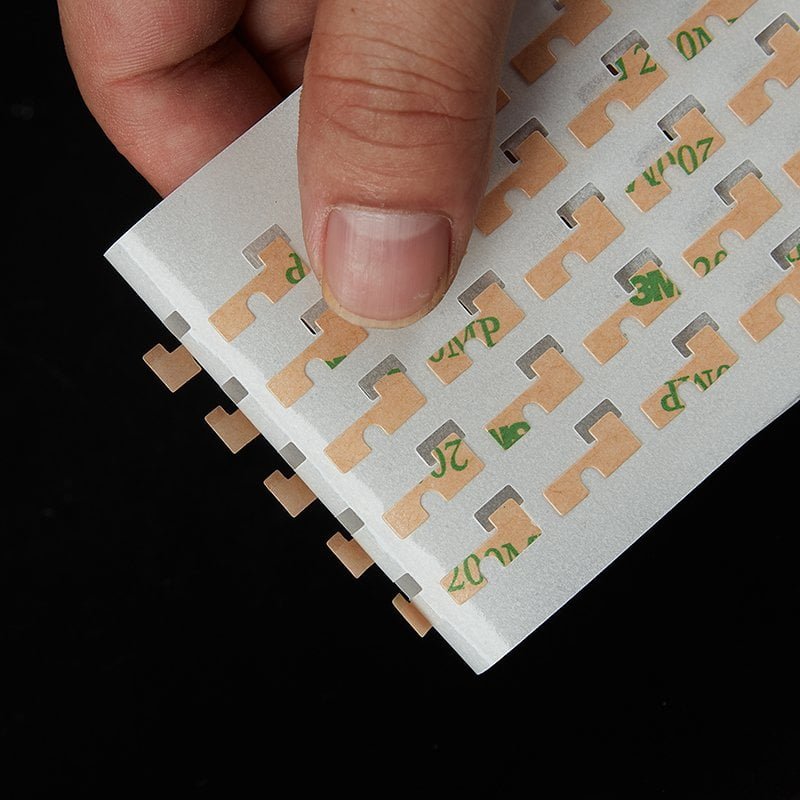
The release force of your liner silicone coating must be matched to the tack level of your specific adhesive. High-tack and permanent adhesives need medium-to-heavy release liners with elevated silicone coating weights. Low-tack or repositionable adhesives pair with light release liners.
Understanding release force grades
Release force is typically measured in cN/25mm (centinewtons per 25mm width) or g/25mm. Industrial release liners are broadly categorized as:
- Extra light release (ELR): 5–15 cN/25mm — for very low-tack or repositionable adhesives
- Light release (LR): 15–30 cN/25mm — for standard acrylic and rubber adhesives
- Medium release (MR): 30–60 cN/25mm — for high-tack acrylic and VHB-type adhesives
- Heavy release (HR): 60–120+ cN/25mm — for aggressive permanent adhesives or very thick foam tapes
The two failure modes I see most often
Failure Mode 1: Parts falling off mid-process
This is the more common problem in my experience. A customer sends us a high-tack double-sided acrylic tape — perhaps a material used for automotive sensor bonding — and specifies a standard light-release 60gsm liner because that is what they used on their previous, lower-tack product.
During rotary die cutting, the die compresses the tape and then releases. The tape's recovery force, combined with its strong adhesion to itself and any tooling contact, is greater than the adhesion between the tape and the liner. Small die cut parts — particularly narrow frames or thin strips — simply pop off the liner. They contaminate the die station and create 100% manual inspection requirements.
The fix: increase liner release force until the adhesive prefers the liner surface over any competing surface during the cut stroke.
Failure Mode 2: Parts that cannot be separated from the liner
Less common but equally damaging. An engineer designing a wearable device component pairs a very aggressive silicone pressure-sensitive adhesive with a heavy-release liner chosen "for safety." On the assembly line, the peel force required to separate the die cut part from the liner is high enough that operators are stretching or tearing the part. In automated assembly, the robot cannot generate enough peel moment without breaking the part.
The fix: step down to a lighter release grade and run adhesion testing — peel force on the liner surface versus peel force on the target substrate — to confirm the part will release from the liner before it releases from the product.
Differential release liners for double-coated tapes
Many die cut applications use tape with adhesive on both sides. In these cases, the liner must provide differential release — a different release force on each face of the liner. The "easy release" side peels first during application, leaving the second adhesive surface ready to bond.
Getting this differential ratio right is one of the more nuanced parts of liner specification. I typically target a ratio of at least 3:1 between heavy-release and light-release faces to ensure reliable, consistent sequential peeling in production.
Does release liner color matter for die cut tape?
Color feels like a cosmetic concern. In practice, it influences quality inspection, operator error rates, and customer perception in ways that are easy to underestimate.
A liner color that clashes with the part, the product surface, or the assembly environment creates visual confusion. Operators miss liners that were not removed. Customers receive finished products with backing paper still attached. QC inspectors struggle to verify coverage under poor lighting.


Release liner color affects downstream quality control and customer perception. White, yellow, and transparent liners are the most common industrial choices. The correct color depends on the tape color, the substrate it bonds to, and whether easy visual identification of the liner is critical to your assembly process.
The most common liner colors and when I use each
White: The default choice for most applications. White provides high contrast against dark adhesives (black acrylic, carbon-loaded conductive tapes) and makes liner removal easy to verify visually. It photographs cleanly for quality documentation.
Yellow / Kraft: A classic for general industrial use. Yellow glassine and kraft liners are robust, cost-effective, and visually distinct from most substrate colors. Many customers associate yellow liners with standard industrial tape — it looks familiar and professional.
Transparent / Clear: Best when the customer needs to see the adhesive pattern or verify coverage before bonding. Common in optical applications and medical device assembly. The drawback is that clear liners are harder to confirm as "removed" — a serious concern in automated assembly.
Red / Blue / Green (custom colors): Used when a specific color coding system is in place. For example, a manufacturer assembling multiple tape variants on one line might specify red liners for thermal interface materials and blue liners for EMI shielding gaskets. Color coding eliminates part mix-ups.
> My practical recommendation: always ask your end customer what their assembly environment looks like before specifying liner color. A white liner on a white plastic chassis is an inspection problem waiting to happen.
Frequently Asked Questions
What is the most common release liner for die cut tapes?
The most common industrial release liner is a silicone-coated white glassine or super-calendered kraft (SCK) paper at 60gsm to 80gsm. It suits the majority of standard acrylic and rubber-based double-sided tapes and is widely available at consistent quality from major liner manufacturers.
Can I use the same release liner for both thin film tapes and thick foam tapes?
Generally, no. A 60gsm liner appropriate for a 0.1mm PET film tape will buckle and deform under a 1.5mm acrylic foam tape during die cutting. Thick foam tapes require heavier liners — typically 100gsm to 120gsm — to maintain flatness and consistent cut quality.
How do I know if my release force is too high or too low?
Run a simple peel test at 180° angle, measuring peel force in cN/25mm. Compare this to the peel force of your adhesive on its target substrate. The liner peel force should be significantly lower than the bond strength to the substrate. If parts fall off the liner during handling, increase release force. If parts are hard to peel, decrease it.
Does liner color affect adhesive performance?
No. Liner color is a surface dye or base paper selection — it does not change the silicone release coating chemistry or the adhesive bond. Color is purely a functional and aesthetic choice for identification and inspection purposes.
What is a differential release liner?
A differential release liner has two silicone-coated faces with different release forces — one "easy peel" side and one "tight" side. They are used with double-coated tape constructions so that the operator or machine always peels the correct face first during sequential assembly steps.
Conclusion
Choosing the right release liner for die cut tape comes down to three non-negotiable variables: tape thickness and weight, adhesive tack level, and liner color for downstream quality control. Match your liner weight to your tape construction to maintain flatness and cut precision. Dial in your release force grade to prevent parts from falling off or refusing to peel. Then choose a liner color that makes your assembly team's job easier, not harder.
These decisions are not afterthoughts — they are engineering choices that directly affect your production yield and your product's reliability in the field.
If you are developing a new die cut tape component and need expert guidance on liner selection, material compatibility, and precision die cutting to ±0.1mm tolerance, contact our team at YXF Adhesive Tape. We will review your application and recommend the right construction from the start.